
Pembongkaran Steam Frame saya yang gagal... dan iFixit yang berhasil
🌐 Konten masih dalam Bahasa Inggris. Terjemahan sedang diproses.
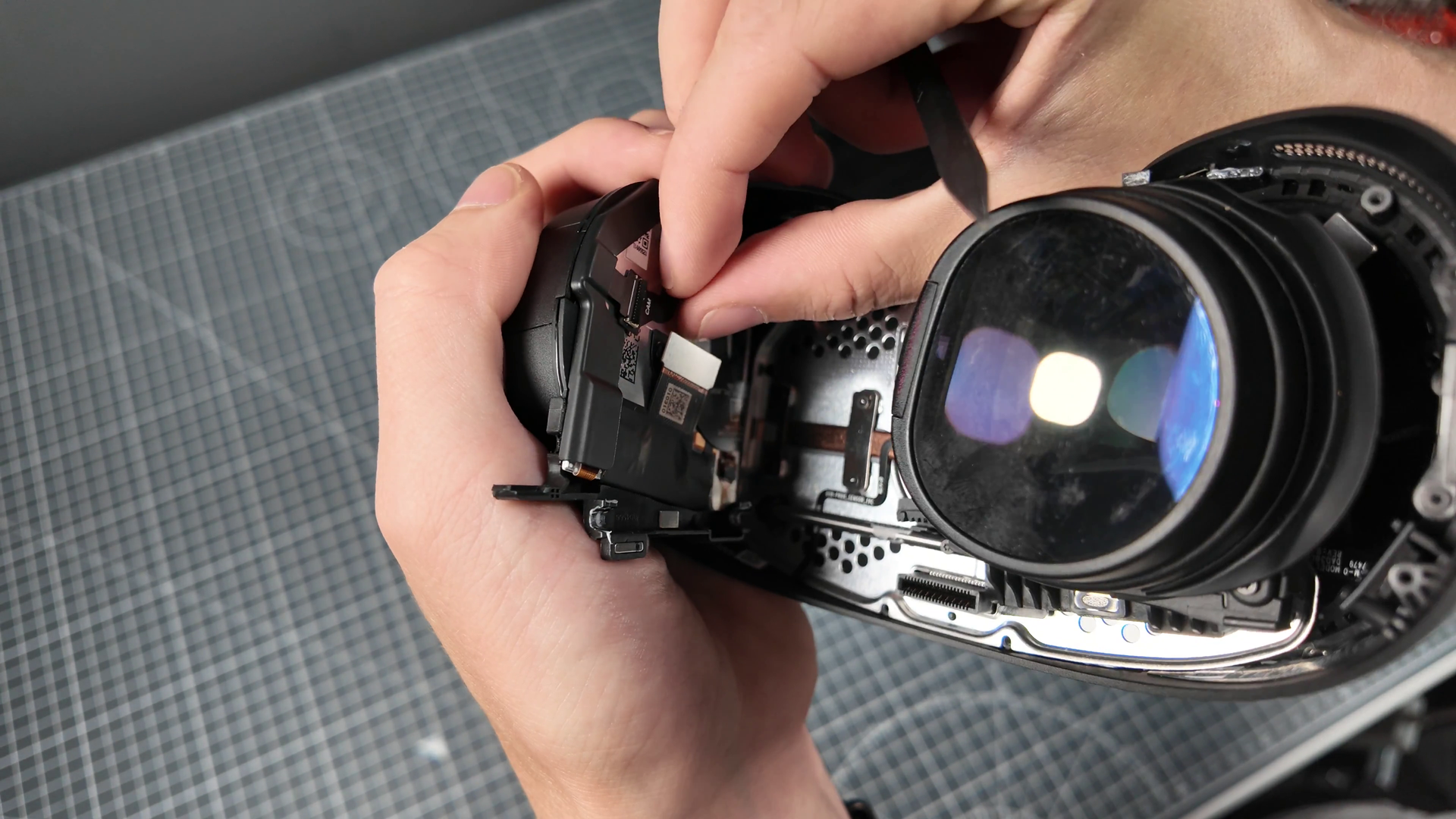
You can watch my teardown attempt above. I've sped it up at times, mostly through the bits where I have no idea what to do next. That's most of it.
My attempts to take apart the Steam Frame ended in me nervously replacing screws on our only review unit. I hadn't broken anything, but I expected I might do if I persisted in stripping the headset down any further. Thankfully, there's no need for me to go through all that again, as iFixit has published its own full teardown.
iFixit's Shahram Mokhtari doesn't mind prying things. Things that I didn't dare pry myself. For example, it's pretty easy to get into the Steam Frame's main 'core module', the bit housing the system-on-chip, optics, RAM, memory, and sensors. Beneath the magnetic face mask sit three switches, release these and the core module comes away from the strap. It's then just six Torx screws to remove the plastic cover that exposes most of the headset.
The optics (lenses/screens) are attached magnetically to a rail at the top of the headset. They're pretty easy to remove, too; however, the push fit connectors on the back of the are glued onto the back of the optics. I left these in place out of fear—fear of destroying a very valuable object ahead of our review date—whereas iFixit pried those off without a second thought.
It's much easier to access the rest of the headset without the optics flapping around. iFixit says: "this design is pretty darn good for such a complex assembly," and notes only the Bigscreen Beyond has an easier lens stack removal process.
The metal bar the lens stack sits on comes out next, followed by the proximity sensor. This exposes the metal plate, complete with copper heatpipe, atop of the mainboard. At this point, I tried to remove this plate, and in doing so, I also prematurely removed some of the cameras around the edge of the mainboard. When I couldn't remove the mainboard, I was starting to lose my nerve, and this is when I turned back. Though I'm heartened to learn that iFixit's expert also got a little confused at this step.
And here's iFixit's teardown video:
"Okay, so full disclosure," Mokhtari says, "I got a bit confused here and started to look for other things that might be holding the metal plate in place. I got the two forward-facing tracking cameras that also enable passthrough and after a few minutes I figured out the three screws on the copper heatpipe are also the last holdouts."
It's a shame I never made it any further because this is when we get down to the lovely-looking innards. At least once the thermal paste is cleared away. The Snapdragon 8 Gen 3 is sat beneath 16 GB of SK hynix LPDDR5X in the bottom left, with the NAND chip above it—in this case, 256 GB of SK hynix-made storage. Many connectors sit around the rest of the board. These are all easy enough to remove with a pair of pliers or a spudger, though Mokhtari does say it's a bit much for a user repair.
"In context, there are very few repairs that would need this level of disassembly, so I've got to hand it to Valve," Mokhtari says, "they layered the critical components really well with an eye towards user serviceability."
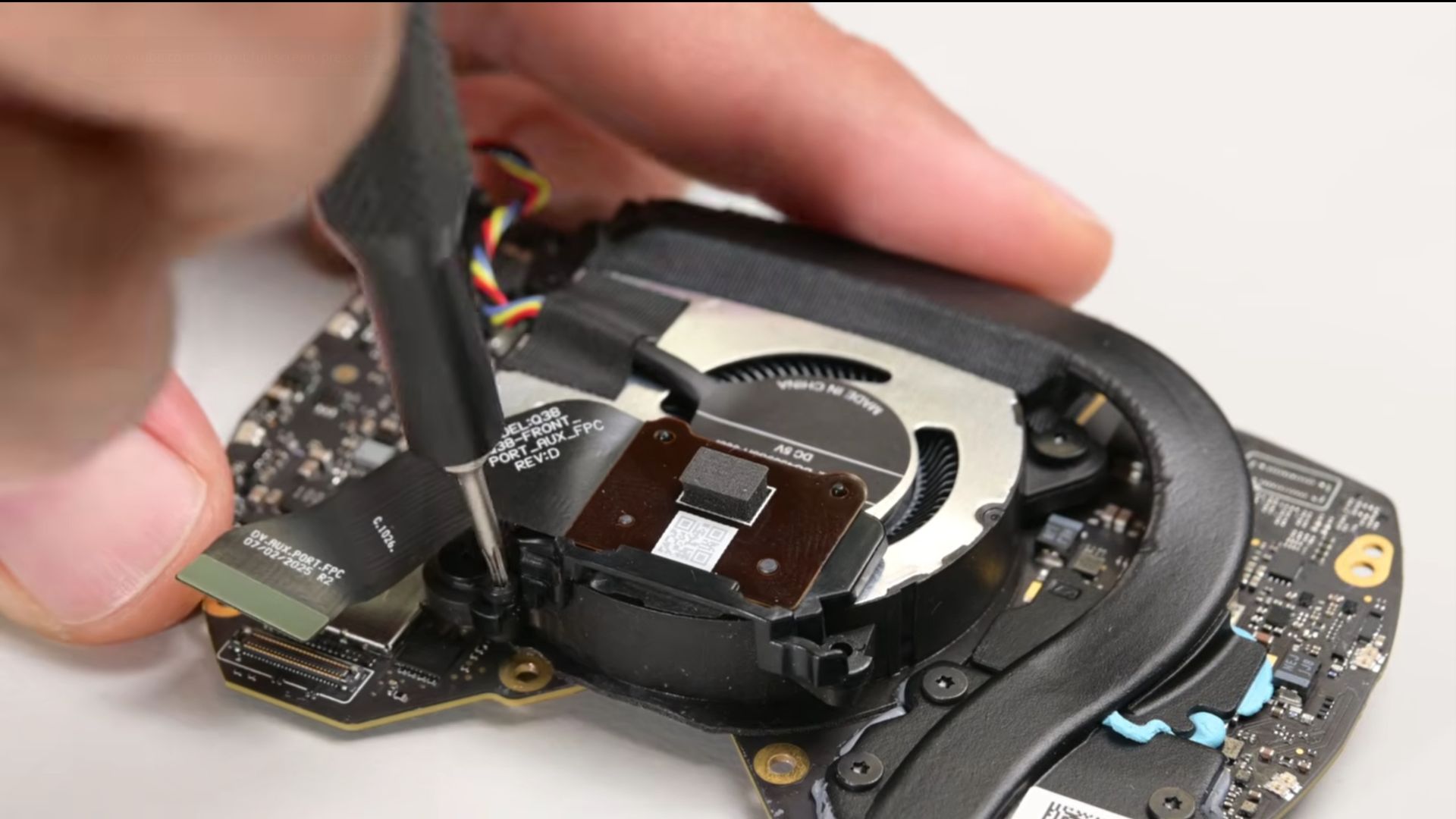
The best bit is when the entire mainboard is removed and flipped over. There's a fan, a larger heatpipe, and a board with barely any space without a visible component. Six IR emitters, three on either side, are present around this side of the mainboard. The fan is the one thing that iFixit thinks should be easier to get to here, as that is an active part and could slow or break altogether.
With the headset mostly torn apart, iFixit offers a quick glance at the controllers. What's interesting from their analysis is these also have loads of IR emitters—like, seriously, loads. That explains why I felt the tracking on the Steam Frame was so accurate and consistent during my testing.
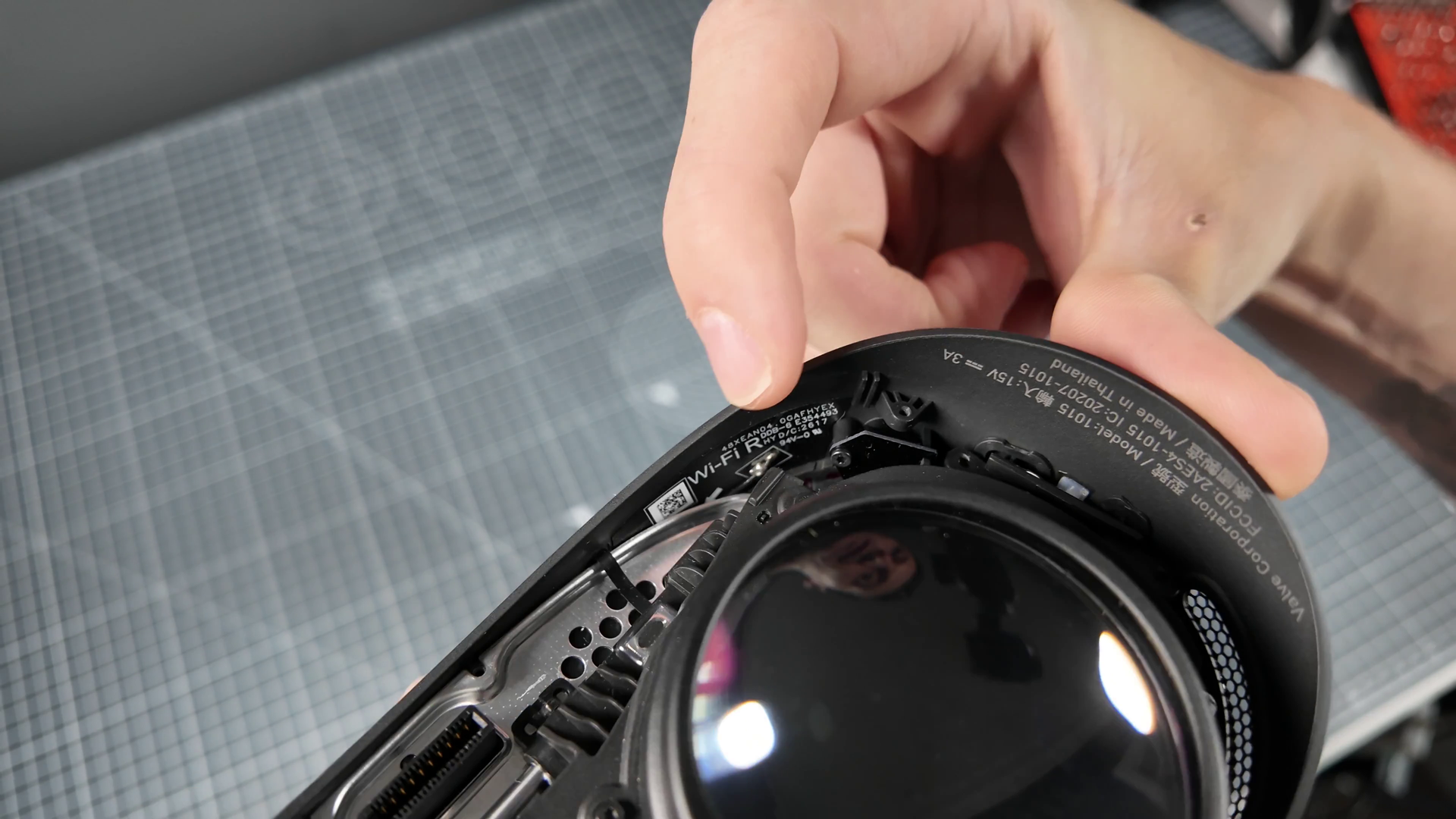
The battery on the Steam Frame should be pretty replaceable, too. There's only a handful of screws, a press connector, and a bit of glue between a user and it. The glue is a bit of a pain but it comes away easily in iFixit's teardown. The company expects third-party battery packs should be fairly easy to add in here, due to the design, and we know Valve is already working on its own strap with interchangeable batteries.
So, altogether, another win for repairability from Valve here. Considering the Steam Controller, Steam Deck, and Steam Machine have also received a thumbs-up in this regard, it's not too surprising, yet it feels a little more impressive for the Frame. Making a compact, standalone VR headset user serviceable sounds like hard work, but with a few exceptions, it looks like Valve has done it.
Sumber: PC Gamer