
Anggota tubuhku yang lamban berarti aku sangat buruk di Black Myth: Wukong baik pada pengontrol, maupun mouse dan keyboard—jadi tentunya antarmuka otak-komputer adalah jawabannya
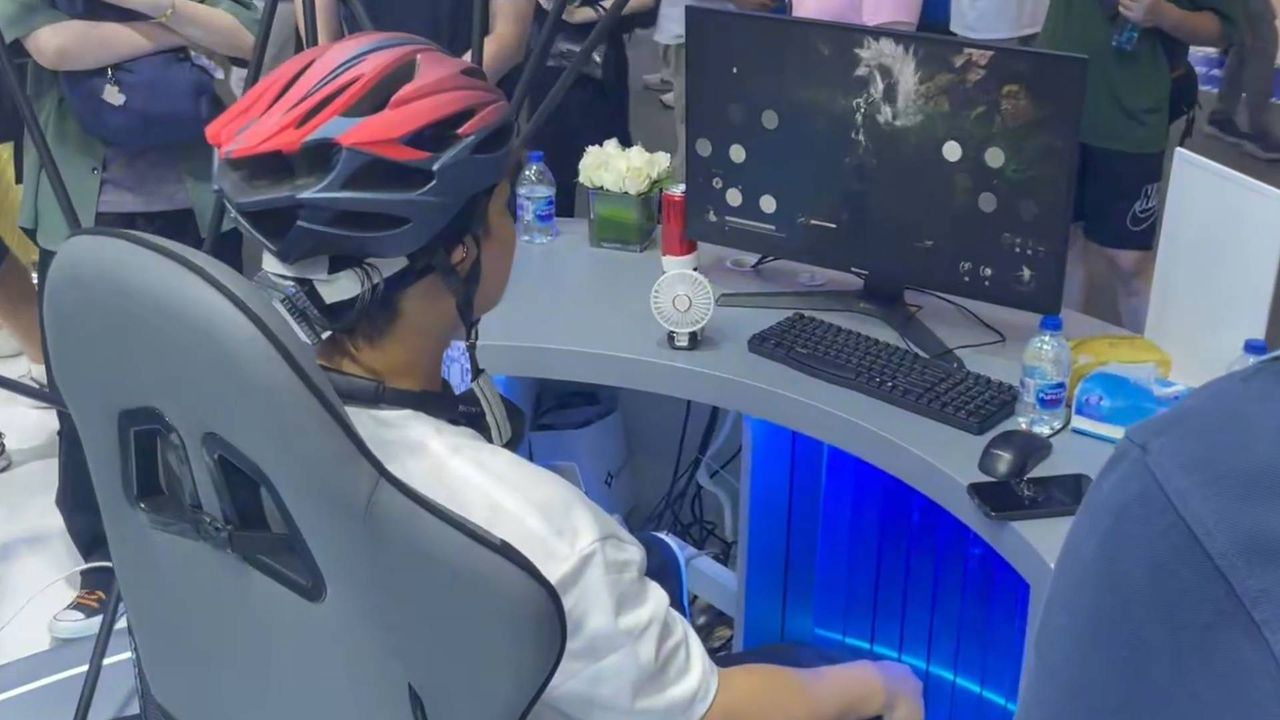
Translating brain activity into game inputs is the stuff of absurdly long-running sci-fi anime. It's also a tech that, though very much in its infancy, now exists in the real world too. For instance, attendees at this year's World Artificial Intelligence Conference in Shanghai could have a go at playing Black Myth: Wukong with just their brain waves.
AI enthusiast Huang Lu shared a video of the non-invasive brain-computer interface at WAIC 2026 via X. According to the exhibit's staff, it only takes about five minutes to calibrate for each gamer.
A WAIC press release describing the exhibit explains, "The non-invasive system captures and decodes neural signals, then converts the user's intentions into device commands. Related technology is also being used in sleep-related applications, early warning for epileptic seizures, and anesthesia monitoring."
The setup here is a bit different to similar brain-computer interfaces I've seen. Namely, it doesn't require the user to think of very specific stimulus in order to activate different regions of the brain, a la streamer PerriKaryal's EmotivBCI setup.
Instead of, say, thinking about a cricket jumping in order to dodge in-game, the setup at WAIC 2026 instead leverages Steady-State Visual Evoked Potentials (SSVEP). This involves various on-screen targets projected over the top of gameplay flashing at different frequencies. According to Huang Lu, "Your brain generates unique EEG signals in response, which are detected by a headset and translated into in-game controls."
holy sht.. you can now control computers with your thoughtssomeone at WAIC 2026 is playing Black Myth: Wukong using only a brain-computer interfacethe system flashes visual targets at different frequencies, your brain generates unique EEG signals in response, which are… pic.twitter.com/I1U4dsaW5mJuly 19, 2026
The most obvious application of a BCI like this is as another option for gamers with restricted mobility and physical disabilities. I do wonder whether this specific system's use of flashing targets would exclude folks with photo-sensitive epilepsy, though.
BCIs can also be challenging to game with due to latency. However, PerriKaryal has already demonstrated it's entirely possible to wipe the floor with Black Myth's second boss, Linguxi, using just the power of thought (and the odd voice command).
Other BCI tech was also on show at WAIC 2026. BrainCo demonstrated a similarly non-invasive BCI that allows users wearing an EEG headset to remotely control robotic limbs and humanoid robots. The press release explains: "The user puts on an EEG headset that picks up the wearer's brain signals, AI algorithms decode those signals to identify motor or control intent, then that intent gets converted into commands for the robot. The entire process takes under 200 milliseconds."
As cool as that sounds, just like with gaming, a 2 ms delay is still some serious latency to navigate. After all, if a robot drops the bottle it's pouring from, there's little hope of the interface recognising the impulse to catch it fast enough.
Sumber: PC Gamer