
Start-up reaktor nuklir yang menargetkan tuntutan energi AI memamerkan teknologinya dengan Nvidia DGX Spark, meskipun demo situs web membutuhkan pembangkit listriknya sendiri
Names poached from Tolkien's works. Glossy websites, packed with animations and all kinds of promises. Slightly ludicrous tech demonstration. All the hallmarks of today's tech companies, one might think. But in the case of one nuclear power start-up, the super-slick marketing is actually a good reminder that AI's rampant hunger for energy needs can't be ignored or solved by traditional methods.
Today, Valar Atomics became the first nuclear startup to make electricity, and we did it by powering an NVIDIA Spark.This is the first meeting of advanced nuclear and AI; two technologies which will transform the next century.But that’s only the start of our collaboration. pic.twitter.com/hwa54wbFQyJuly 2, 2026
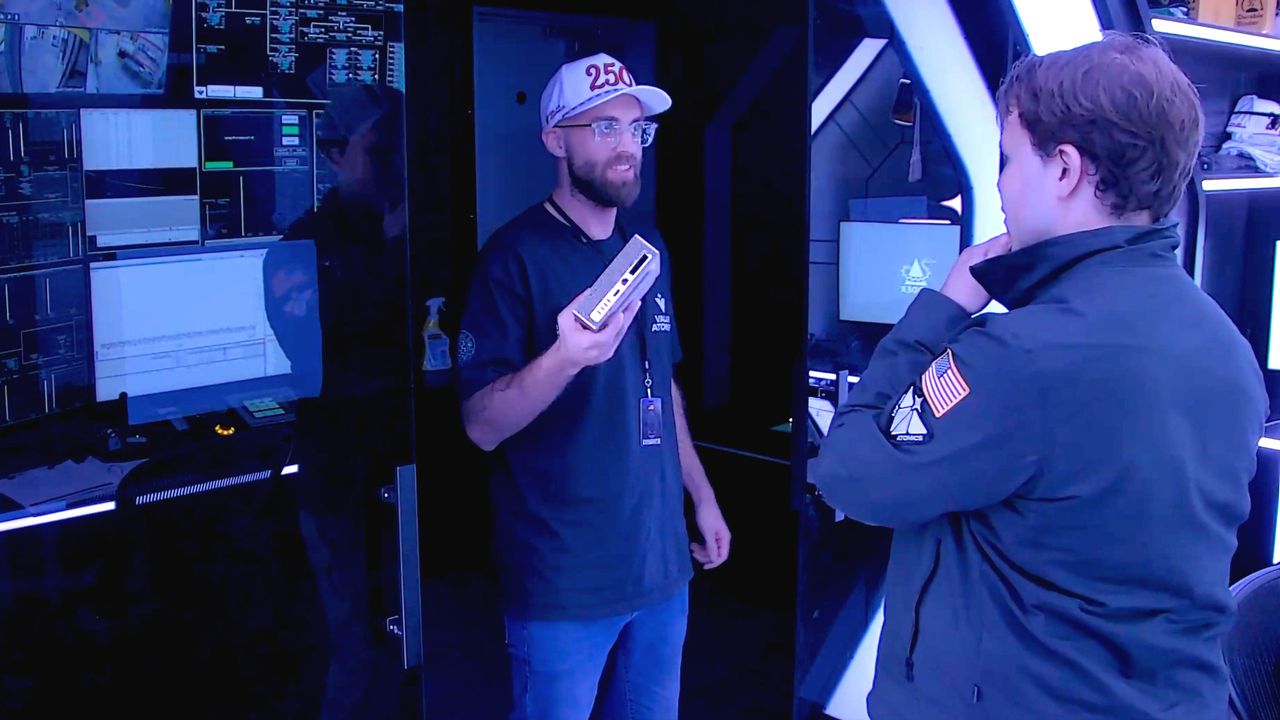
As reported by our chums over at Tom's Hardware, Valar Atomics recently hit the headlines by teaming up with Nvidia to demonstrate the first public run of its Ward 250 nuclear reactor, namely by using said device to power a DGX Spark. Not that one needs a big powerplant to run Nvidia's GB20-powered box, of course, but it's not hard to see what the implication is behind the tech demonstration.
Yes, that's right: it's a solution to the exponential rise in energy consumption by AI data centers, hence Nvidia's involvement in all of this. But let me back up for a moment and explain what's noteworthy about Valar's system.
The Ward 250 is a type of high-temperature gas-cooled nuclear microreactor (HTGR for short), which uses helium as the coolant and heat-transfer medium, rather than water, the norm for most reactors worldwide. But rather than using bulky heat exchangers to turn water into steam to drive a bunch of turbines and generators, Valar's system pushes the helium through a compact thermoelectric generator.
While HTGRs have been around for many years, they've never really caught on in the world of nuclear reactors, despite their advantages in thermal efficiency and safety, mostly due to cost reasons. Since their cores run at very high temperatures, HTGRs require more expensive construction materials than a typical PWR (pressurised water reactor), and they're more costly to scale up.
But while they're less suitable as a major provider for wholesale electricity, they're potentially ideal for powering something much smaller, such as a data center, and that's Valar Atomic's entire gist, though its operations so far have not been without criticism.
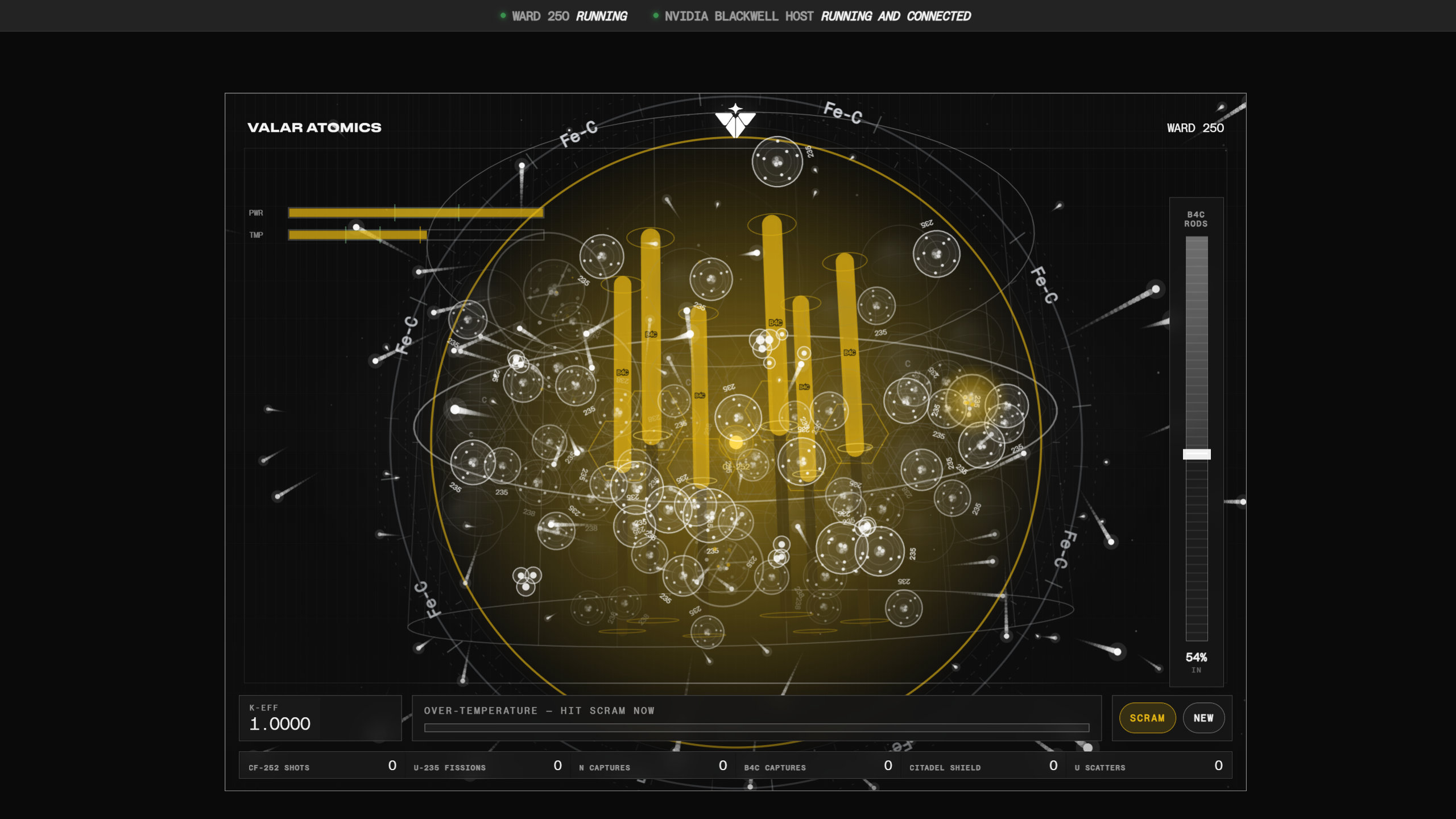
Powering a DGX Spark wasn't enough for Valar, though, and it also has a website hosted on a server that the start-up claims is also juiced by the Ward 250. If you want to check it out, click on this link, but before you do, a word of caution. Right at the bottom of the page, there's a really neat-looking demo of the reactor core in operation, and you can play around with the control rods to fire it up or slow it down.
However, the moment you jump in, your CPU's cooling fans will go brrrrr. Regardless of what browser I use, my Core Ultra 7 270K Plus processor jumps from 28 W of power consumption to around 72 W, with two P-cores merrily screaming away. Multiply that by, say, one hundred thousand website visitors, and you now have many megawatts of additional power being consumed to showcase Valar's system.
Localised microreactors are probably going to be one of the more ideal solutions to AI's power needs, but it would be prudent not to require one just for the marketing of said devices.
Sumber: PC Gamer