
Pengembang Spore mengatakan pratinjau game evolusi lebih ambisius daripada apa yang sebenarnya mereka buat, dan mereka 'membangun fantasi di benak orang-orang yang tidak dapat dicapai'
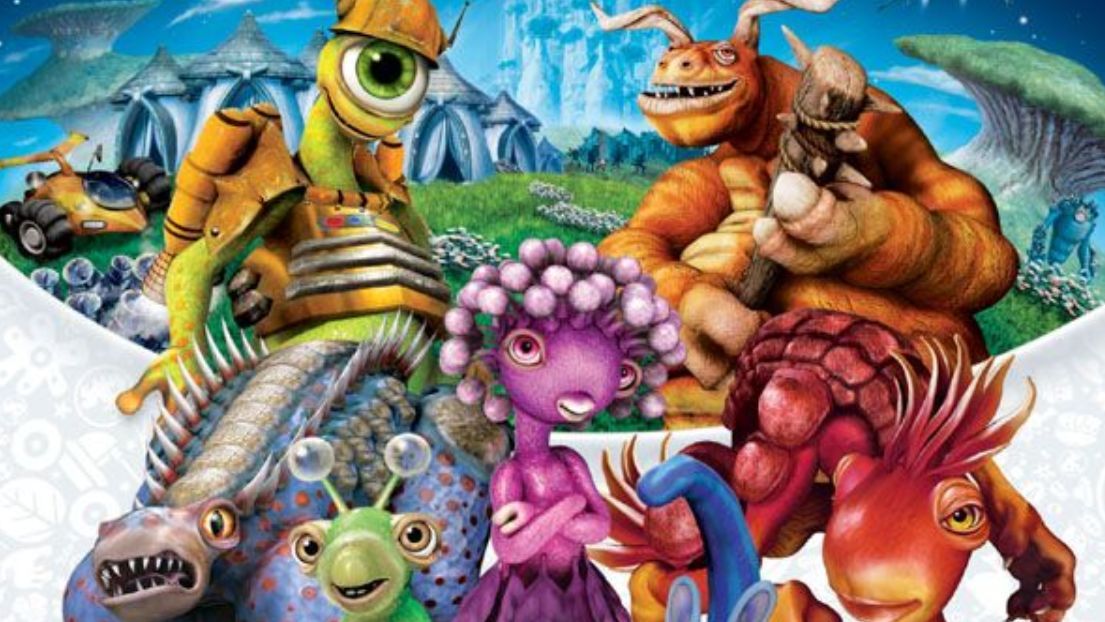
Spore is the greatest game that never was. Clear as day, I remember the wonder the pitch instilled in me as a young'un. It was to be a true simulation like The Sims, not just of daily life, but of the history of all life—life as everything from a unicellular amoeba to a spacefaring alien of my own design, all realized in exacting detail.
That was the idea, or the one overhyped fans ran with, anyway. The game we got is not that. It's more of a sci-fi minigame collection with an impressive, if cartoony, character creation engine tacked on. But as an interview-stuffed oral history from Design Room explains, that was always the idea.
"Will [Wright] said from the jump that this was going to be a lot of little minigames. Just nobody listened," gameplay designer Jenna Chalmers told Design Room. "Everybody knew him for these really rich, robust simulations, and wanted all the depth and the richness … people heard what they wanted to hear."
Admittedly, this perception of Spore as some sort of mythical super-game didn't materialize out of thin air. When The Sims designer and PC gaming mastermind Will Wright presented the game at GDC 2005, he did so in the now-infamous talk humbly titled "The Future of Content" which shows the game with a less cuddly art style and some features that never made it into the final game, like an aquatic stage between single cell gameplay and land-dwelling creaturedom.
In the talk, Wright throws around tantalizing terms like "procedural verbs" and notes that budding societies may come to favor emotional or logical styles of reasoning—while a good deal of what's shown has some sort of approximation in the final game, it's easy to fill in the blanks with depth that isn't there. As for the stuff that never made it into the final game, there's a whole fan wiki article about that.
You don't have to scroll down far to see that people are still bitter about it. "Remember what they took from us," reads a comment from Worldsawesomestguy posted just five years ago.
Talking to Design Room, Will Wright said that preview might have been a bit much. "[EA executive Don Mattrick] was really against [the talk]. He said we shouldn't show it to anybody yet. But I wanted to start getting early feedback," said Wright. "We were definitely overrepresenting what it eventually became there."
Art director Ocean Quigley recalled the talk's glowing reception: "One of the journalists who covered [the GDC talk] said, 'This is either the most amazing game design of all time, or an act of bold chicanery.' It was B. It was an act of bold chicanery." Alex Hutchinson, lead gameplay designer on Spore, said the preview "built a fantasy in people's minds that was unachievable."
You might assume that, as is so often the case in stories like these, publisher meddling led to a change in direction or cut necessary dev time short. But in the article, Wright and others recalled that EA gave Maxis both a long leash creatively and an exceptionally long development timeline of nine years (though Wright recalled he and EA exec Mattrick were at odds on certain design decisions).
"We never felt pressure," said developer Chris Hecker in the article. "EA's got lots of problems, but this was not one of them."
Quigley told Design Room that keeping that relationship strong took coming up with "compelling bits and pieces" to share frequently, "Scheherazade-style," but ultimately Wright had won a lot of good faith with his previous successes. Spore was afforded so much time, money, and confidence on the promise of what it could be.
"He had more credibility than anybody," Quigley explained. "And this is both good and bad. That gave him license to explore half-baked ideas and see if there was anything there. But it also gave him license to be self-indulgent. There wasn't any sense of crisis. And sometimes a sense of crisis can be useful for driving decisions and getting to clarity."
Despite the turmoil behind its creation, the game still found an audience and has its merits. It's still one of the most ambitious games on PC thanks to its sheer variety and impressive procedural animation, and even if the game itself is kind of "a slog" as Philippa Warr described it writing for PC Gamer, there's nothing else quite like it. That's probably why it's inspiring games like the roguelike Everything Is Crab to this day.
2026 games: All the upcoming games
Best PC games: Our all-time favorites
Free PC games: Freebie fest
Best FPS games: Finest gunplay
Best RPGs: Grand adventures
Best co-op games: Better together
Sumber: PC Gamer