
The best feature in the original Alan Wake is an absence: the man has no reticle
🌐 Konten masih dalam Bahasa Inggris. Terjemahan sedang diproses.
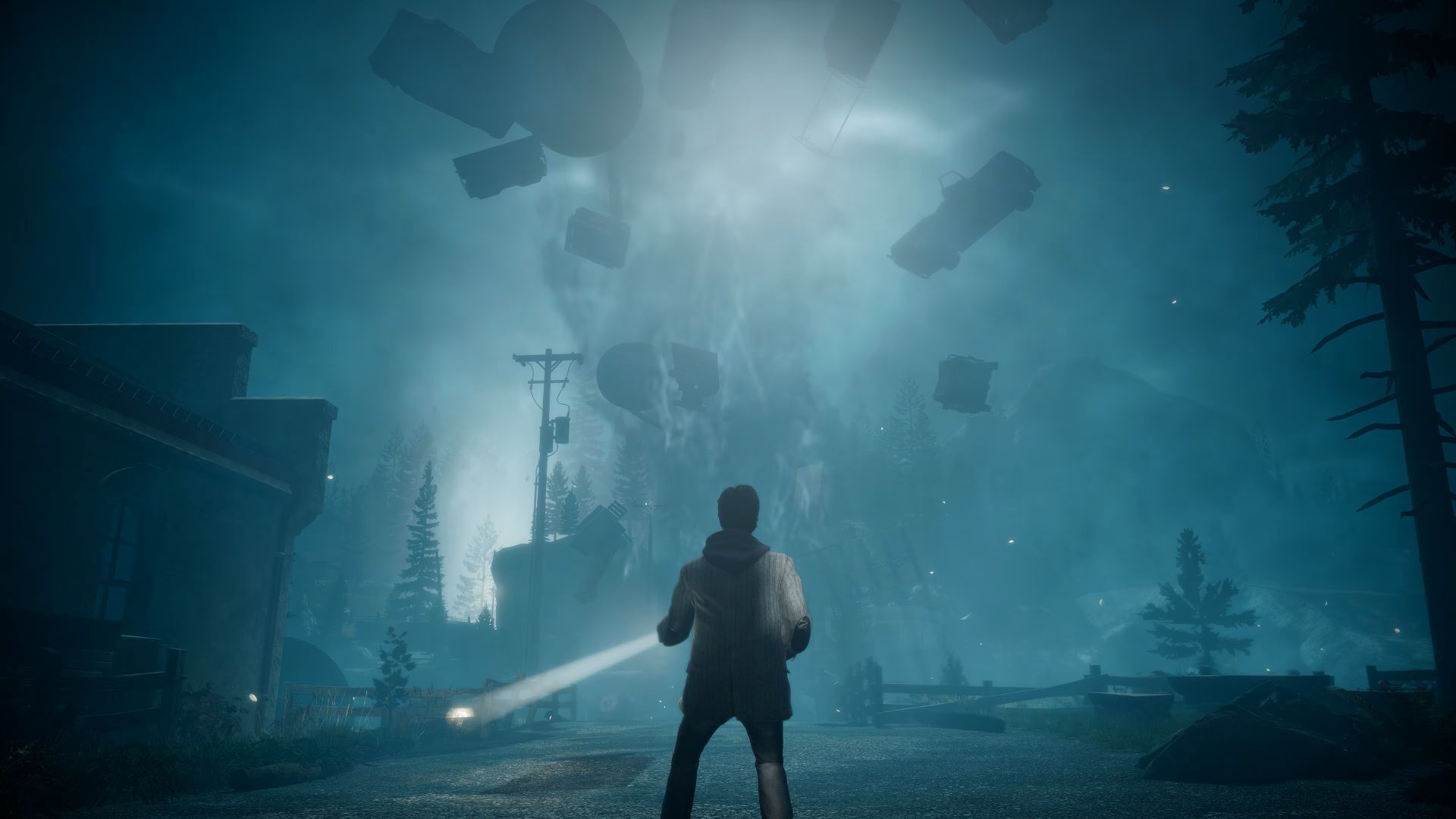
Weird Weekend is our regular Saturday column where we celebrate PC gaming oddities: peculiar games, strange bits of trivia, forgotten history. Pop back every weekend to find out what Jeremy, Josh and Rick have become obsessed with this time, whether it's the canon height of Thief's Garrett or that time someone in the Vatican pirated Football Manager.
There's a recurring motif in Alan Wake which isn't played for laughs, yet is pretty funny nonetheless. Whenever the alcoholic FBI agent has a chance to peacefully capture our fugitive novelist, he blows it by firing his service pistol wildly through the air. The local police chief tells him to cool his jets; the late night radio host wants to know what's the matter with him. But Agent Nightingale can't help himself.
It's as if the pressure of having a target in his sights is simply too much. He flips the board, all the pieces fly everywhere, and Alan Wake is lost amid the trees. "I'll get you yet," Nightingale hollers into the dark. "Even if it kills me, y'hear me HP Lovecraft?"
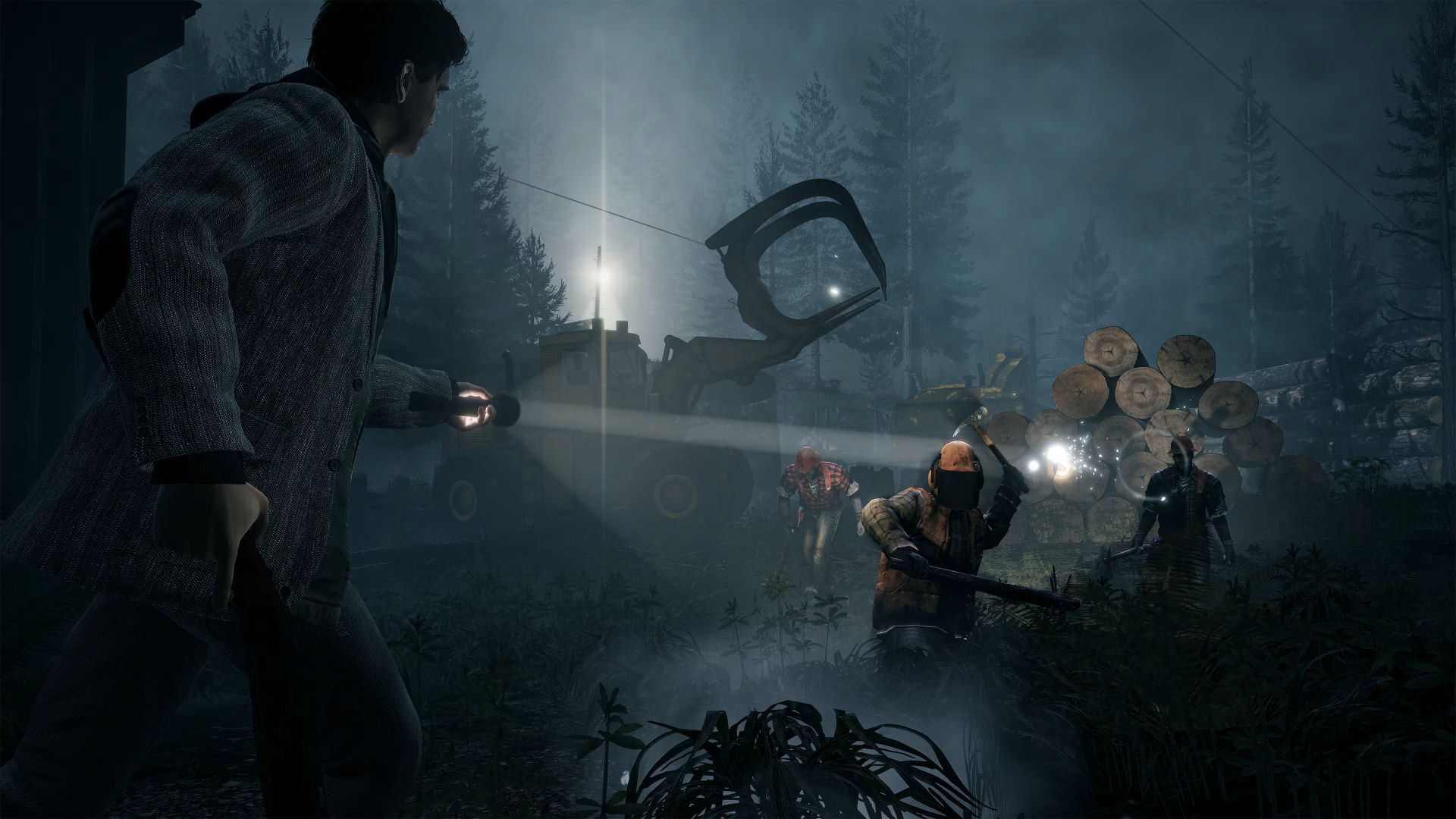
Wake, meanwhile, remains impervious to the man's vendetta. "I'd fallen off so many cliffs it was ridiculous," he thinks to himself as he slides on his arse down a steep embankment, escaping Nightingale's clutches once again.
It's all a little embarrassing. But I do sympathise with the humiliated drunk behind the badge. There's something about aiming a gun in Bright Falls that messes with your head and gets the better of you. And I've identified precisely what that thing is: a missing reticle.
We don't talk about reticles a lot—in the same way you don't tend to notice your own nose, even though it's bang in the centre of your vision. But they're a standard of the third-person shooter genre: a way to indicate what direction you're firing without literal crosshairs. More broadly, they're part of how you orient yourself in a 3D world; some players find that without a reliable point of focus in the middle of the screen, motion sickness gets the better of them.
Given that reticles often didn't feature during the shooter boom of the '90s, you can think of Remedy as early adopters. The studio equipped Max Payne with one in 2001, and stuck with the idea for the sequel two years later. The implementation of the reticle in those games was minimalist—a single, unchanging white dot—but it kept us steady. Steadier than a diet of painkillers did, at any rate.
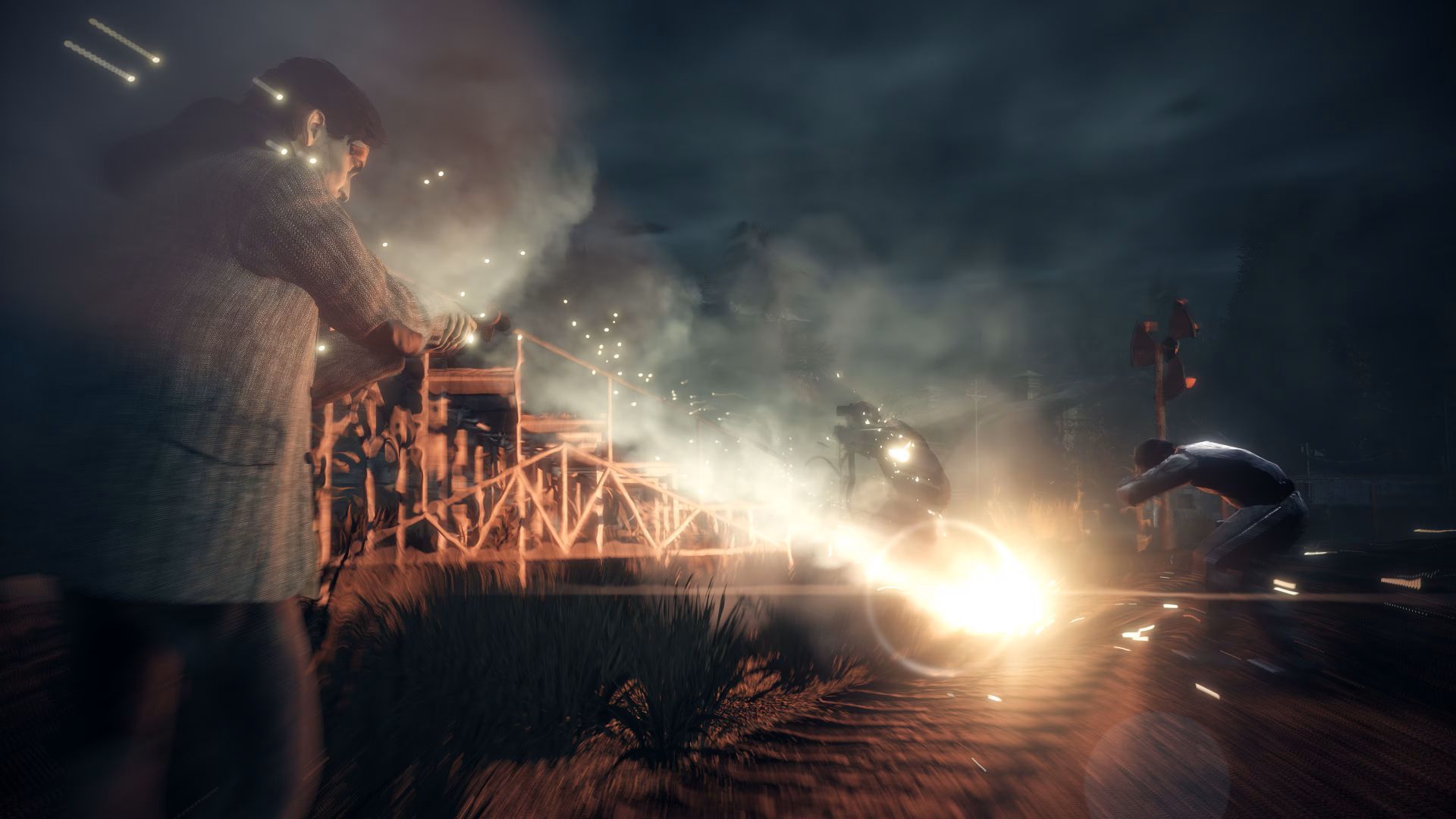
Alan Wake, though, messes with the fundamentals. Its combat is rooted in a supernatural one-two punch. First, you direct your torch at the shadowy silhouettes that assault you to make them vulnerable to ballistic fire. Then you reach for your revolver or shotgun and shoot them in the head and torso until they burn up like a waste paper basket exposed to a cigarette. "I'd never fired a gun outside a shooting range," Wake narrates. "And now I'd just killed someone, or something." Typically for the genre, though, he soon gets over it, and starts shooting shadows in their dozens.
The torch is the closest thing Wake has to a reticle—a beam that roughly hits the spot your bullets are likely to land. But of course, the torch's light isn't painted on the screen as a fixed point; it's shifting constantly within 3D space. Any time Wake passes in front of a pile of logs or a fence post, the beam's length is cut by half or a third. If it's shining on a wall close to his face, the radius of the beam expands dramatically, becoming taller and wider than any enemy he might face.
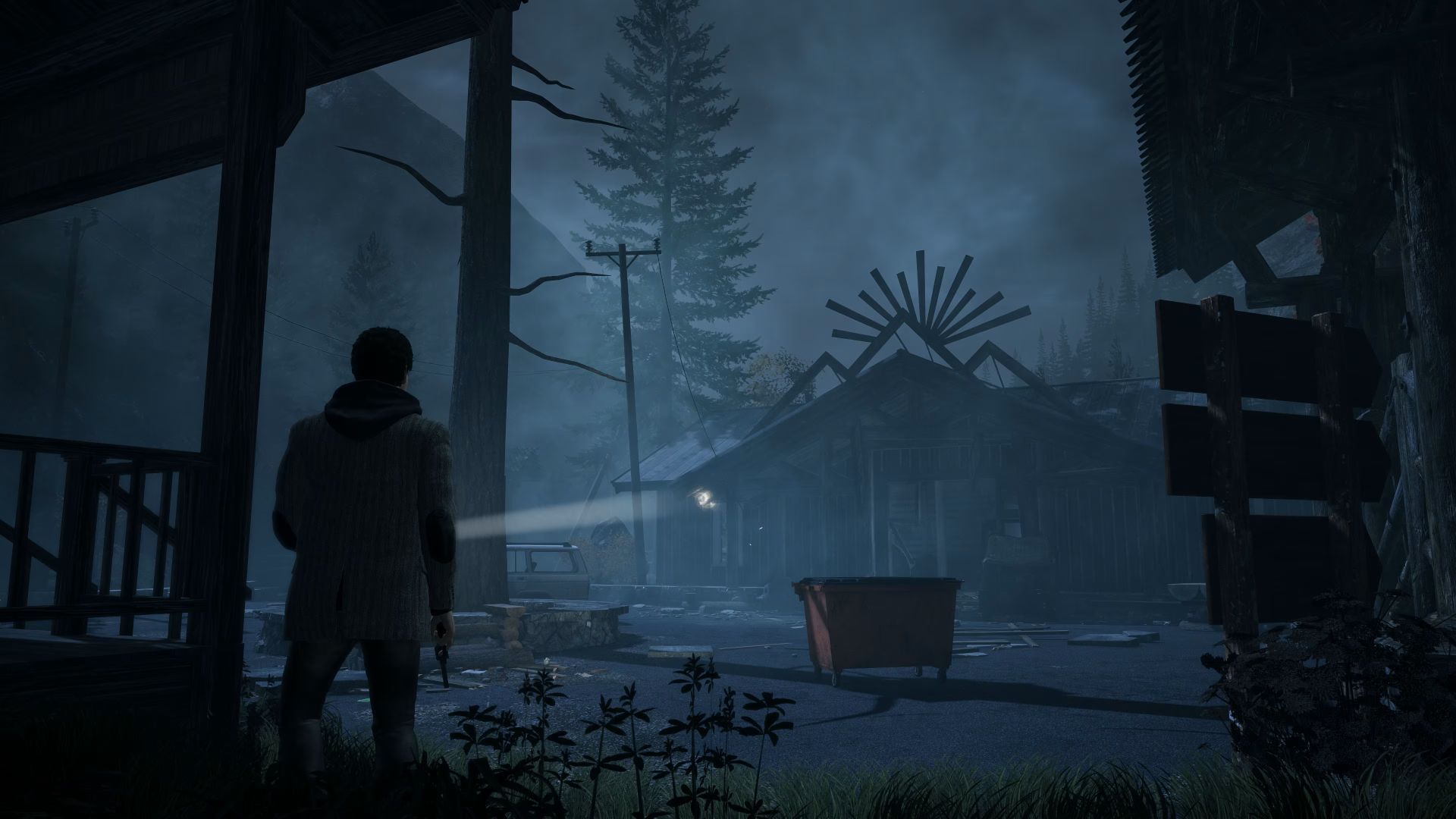
You can pull the left trigger to focus your torch, in a move analogous to aiming down sights. But that comes with a complication: aiming drains your battery, and batteries are relatively rare in the forest that surrounds Bright Falls. Resource scarcity is one of the ways Remedy flirts with survival horror throughout Alan Wake.
What does all this mean during a fight? Usually that you're conserving energy. That you focus your beam only so long as it takes to break through the shadow armour of a charging opponent. Once they're weakened, you're incentivised not to aim down sights while firing your gun, in order to preserve battery life. As a result, you find yourself squinting at ghouls in the foggy mid-distance, attempting to put holes in them without any zoom or assistance from a reticle.
It's an unnerving feeling—as if the training wheels have come off and tripped you up in the process. And perhaps it's unworkable for those susceptible to certain kinds of nausea; it's notable that Alan Wake 2, launched in a more enlightened era of accessibility considerations, does have a traditional reticle that pops up when wielding your pistol.
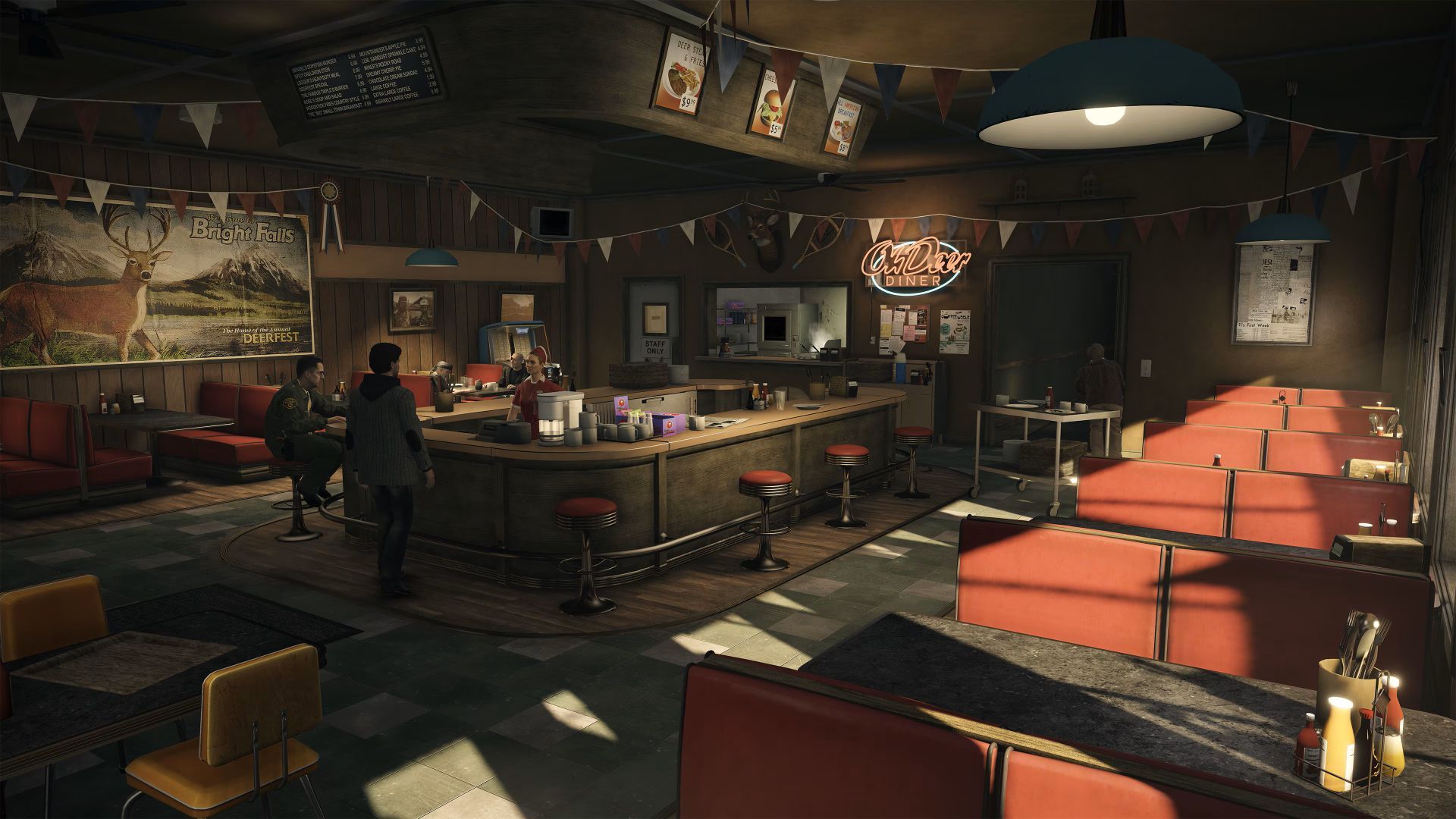
But there's no doubt that the original's approach is effective, too. It lowers your confidence in your aim, heightens any panic you might be feeling, and tangibly plugs you into the game's atmosphere of unravellment. It's a quirk that elevates Alan Wake, even when it begins to repeat familiar patterns in its combat design.
The rather uncertain quality to Alan Wake's shooting is mirrored in its level design as well. Remedy spent three years grappling with open world tech before finally resolving to build the game as a set of linear levels, and that initial ambition is still reflected in the geography of Bright Falls. There's enough room between checkpoints to wander from the path, and at times, the route ahead is distressingly vague.
On top of that, Remedy literally sprinkles non-linear storytelling—scattering pages from the game's manuscript throughout its levels, so that descriptions of fights to come become foreshadowing, and pages from previous scenes induce lingering guilt.
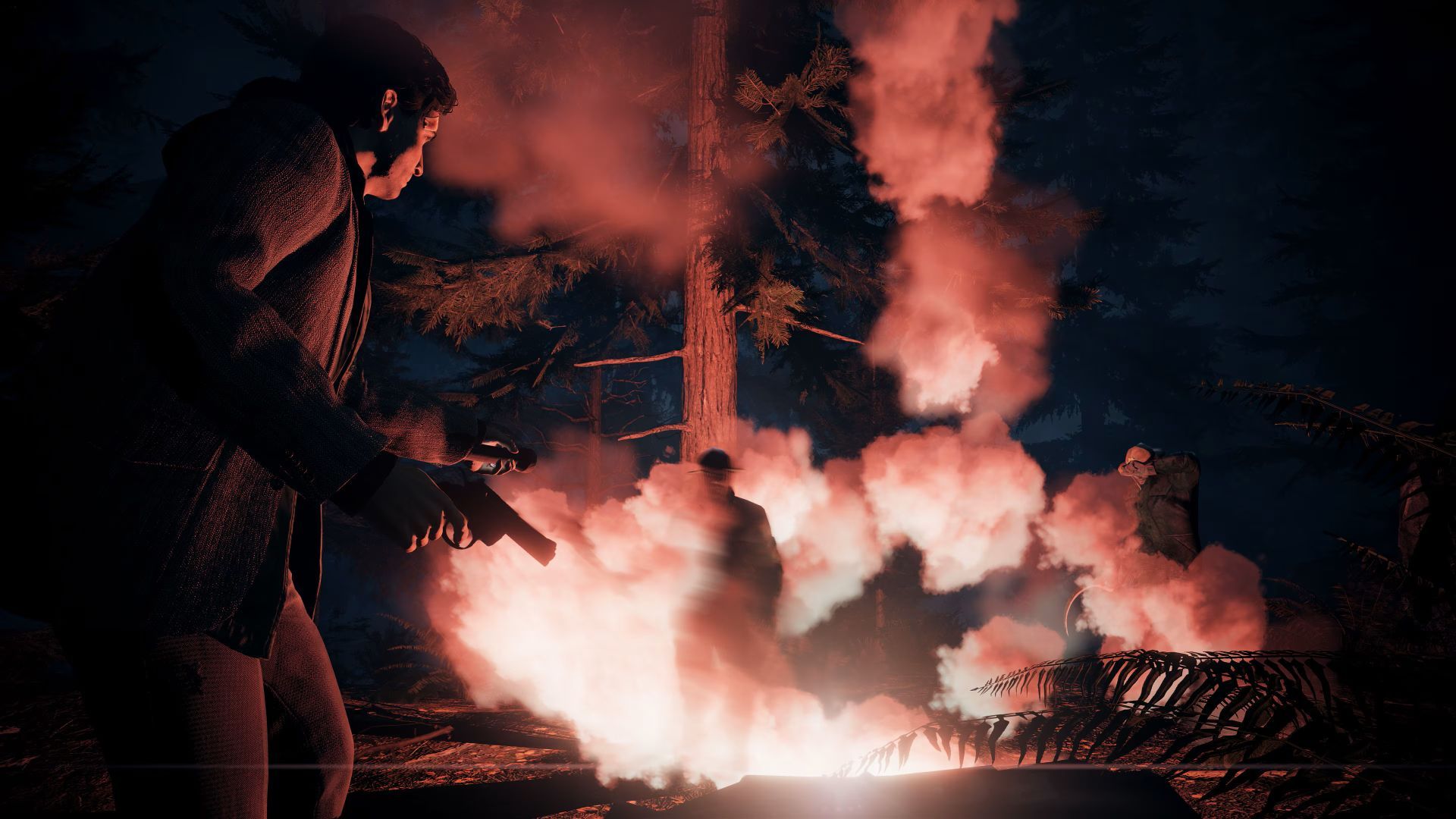
In one instance, a waitress who is infatuated with Wake becomes possessed, drugging the writer with tainted coffee. After coming to, Wake is furious, and leaves her rocking back and forth on the floor of her trailer. Only later does he find the sheet of paper that lays out her haunting perspective. "Rose was smiling so hard it hurt her face," it reads. "She crushed a bottlefull of sleeping pills into the coffee. Deep down inside, she was screaming in terror."
Remedy has made more sophisticated and varied action sequences since Alan Wake. But the woozy fear of its first-ever horror game has no handrails, and that's what makes it distinct. By ditching the reticle, paradoxically, the studio achieved its aim.
2026 games: All the upcoming games
Best PC games: Our all-time favorites
Free PC games: Freebie fest
Best FPS games: Finest gunplay
Best RPGs: Grand adventures
Best co-op games: Better together
Sumber: PC Gamer