
Ulasan Dishonored (2012)
Special commentary on this classic PC Gamer review provided by:
Dishonored review - PC Gamer issue #246 (UK, December 2012)
From the archives: The review below appears as originally written, with only minor changes in formatting and presentation. By Tom Francis
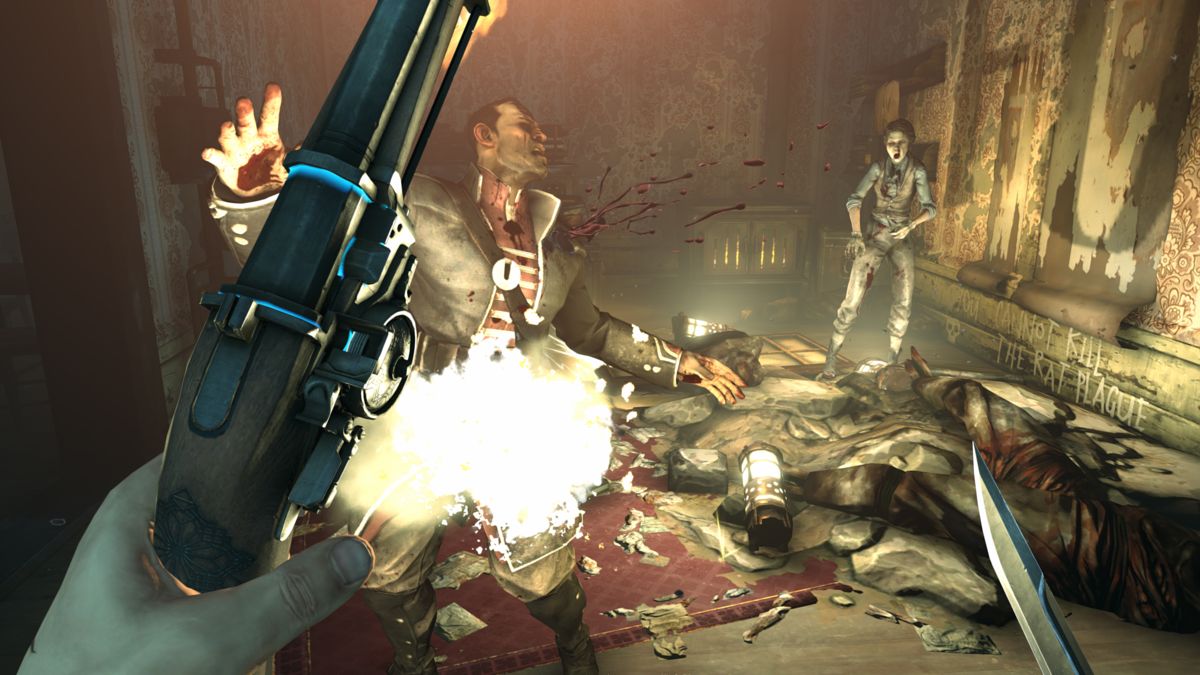
I think I can jump onto another light fitting from here. I’m wrong. I slip, fall, and land inches behind a gold-masked Overseer looking out of the fifth-story window. I only have a split second headstart in getting over our mutual surprise at the situation, and I use it to stab him in the neck.
A second after his body hits the ground, I hear carpet-softened footsteps coming down the hall. Panic. After mentally rejecting three even crazier ideas, I hoist the Overseer’s body over my shoulder and jump out of the window.
Release date October 9, 2012
Expect to pay £30 (in 2012)
Developer Arkane Studios
Publisher Bethesda Softworks
Recommended 3GHz dual core CPU or better, 4GB RAM, GeForce GTX 460 / Radeon HD 5850
Steam Deck Verified
Link Steam
Dishonored is mostly a stealth game, where you play a kind of assassin, in a somewhat steampunk city. Those floundering qualifiers are part of the fun: you don’t have to hide, you don’t have to kill anyone, and while the city of Dunwall mixes matchlock pistols with crackling Tesla tech, it’s a rusty, crumbling place that feels unique.
If you don’t manage the stealth part, the first-person swordfight that breaks out is surprisingly fun, and surprisingly survivable. Time your blocks right and you can take out a squad of guards with vicious counter-attack executions. It’s not always viable later on, and I’m keen to avoid it on this mission anyway. My target is the Grand Overseer, head of Dunwall’s witch-hunting religion, and any alarm will send him running to his underground bunker.
As I sail out of the window, still holding the dead guard, I twist round and Blink back onto the window ledge. There are only six magical powers in the game, and you probably won’t use them all, but you’ll definitely use Blink. It’s a short-range teleport spell that’s almost free to cast, and quickly becomes your main way of getting around the game.
It’s silent, so it makes stealth faster and more versatile: you can Blink past the path of an approaching guard to stab him in the back when he investigates your former location.
And it also gives you a precise and reliable way to climb on the scenery. The game shows you the spot you’ll jump to as you aim the spell, so the kind of player who habitually falls off light fittings can still blink to a fifth- story window ledge without falling to his death.
City blocked
The ledge is safe and out of sight, but I don’t think it’s wide enough to drop the body on. And the huge, rainlashed courtyard below is crawling with guards. I circle half the building before I finally see an open dumpster at ground level. I think I can toss him into it from all the way up here.
I’m wrong.
Dishonored’s missions unfold across huge chunks of this plague-infested city. The best of them spend that space in breadth as much as length, letting you explore several city blocks outside of the building you plan to infiltrate. You’re free to sneak through the rat-riddled alleyways, clamber up to the rooftops and Blink between them, or dive into every open window and ransack the buildings for secrets and loot. It’s a fantastic sense of freedom.
There are even side quests in these extensive regions, and masses of incidental storytelling. Books, notes and diaries offer you enigmatic clues to stashes of loot, safe combinations and magical items.
The city watch patrol most of it, but other sections are ruled by thugs, the gutters crawl with plague- zombies, and some apartments are inhabited by stranger folk altogether.
This courtyard, though, is patrolled by Overseers. And a very dead Overseer has just fallen out of the sky and landed heavily on a spiked metal fence, dangling from it like a gruesome warning. I freeze.
They haven’t seen it yet. I slip quietly back in through a different window.
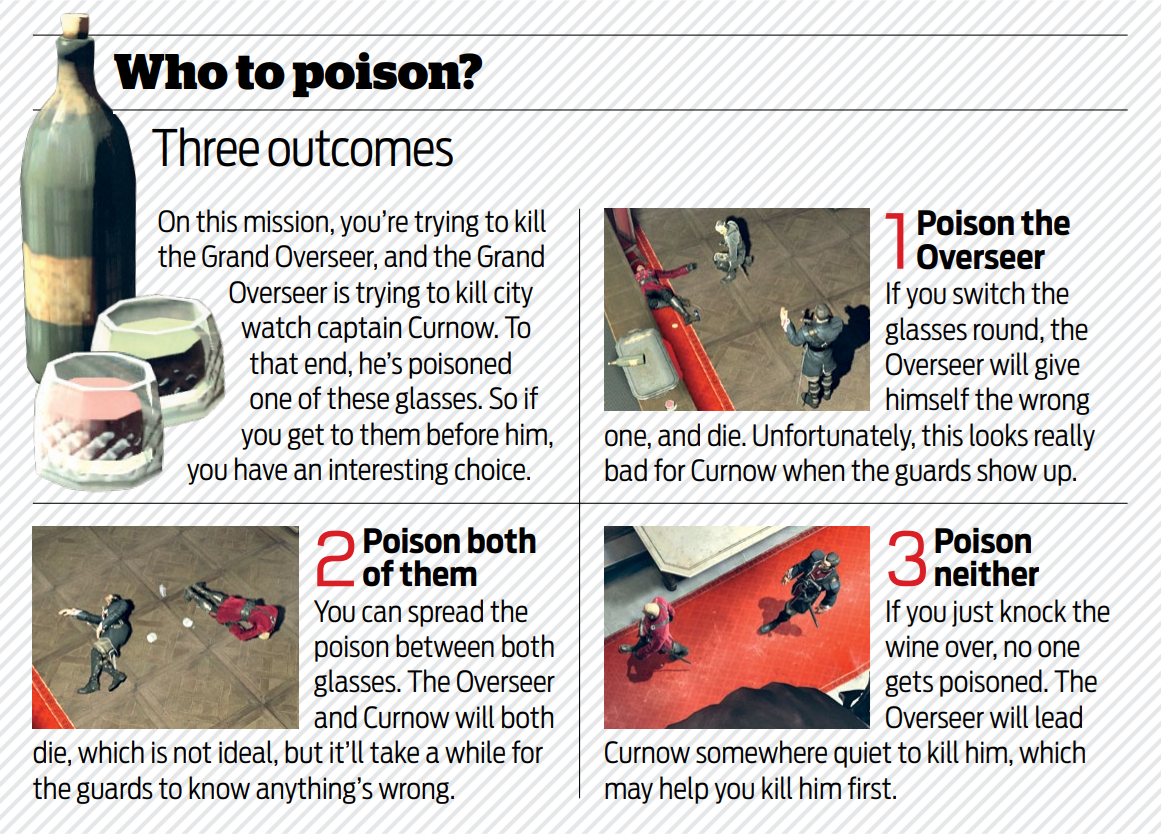
I’m in the meeting room my target is headed for, and there are two glasses on the table. My mission is to kill the Grand Overseer, but there’s an optional extra: he’s about to poison one of the few good men left in the city watch, and I’ve been asked to prevent it. I’m just about to do something clever with the glasses (see ‘Who to poison’) when the doors swing open.
Underseers
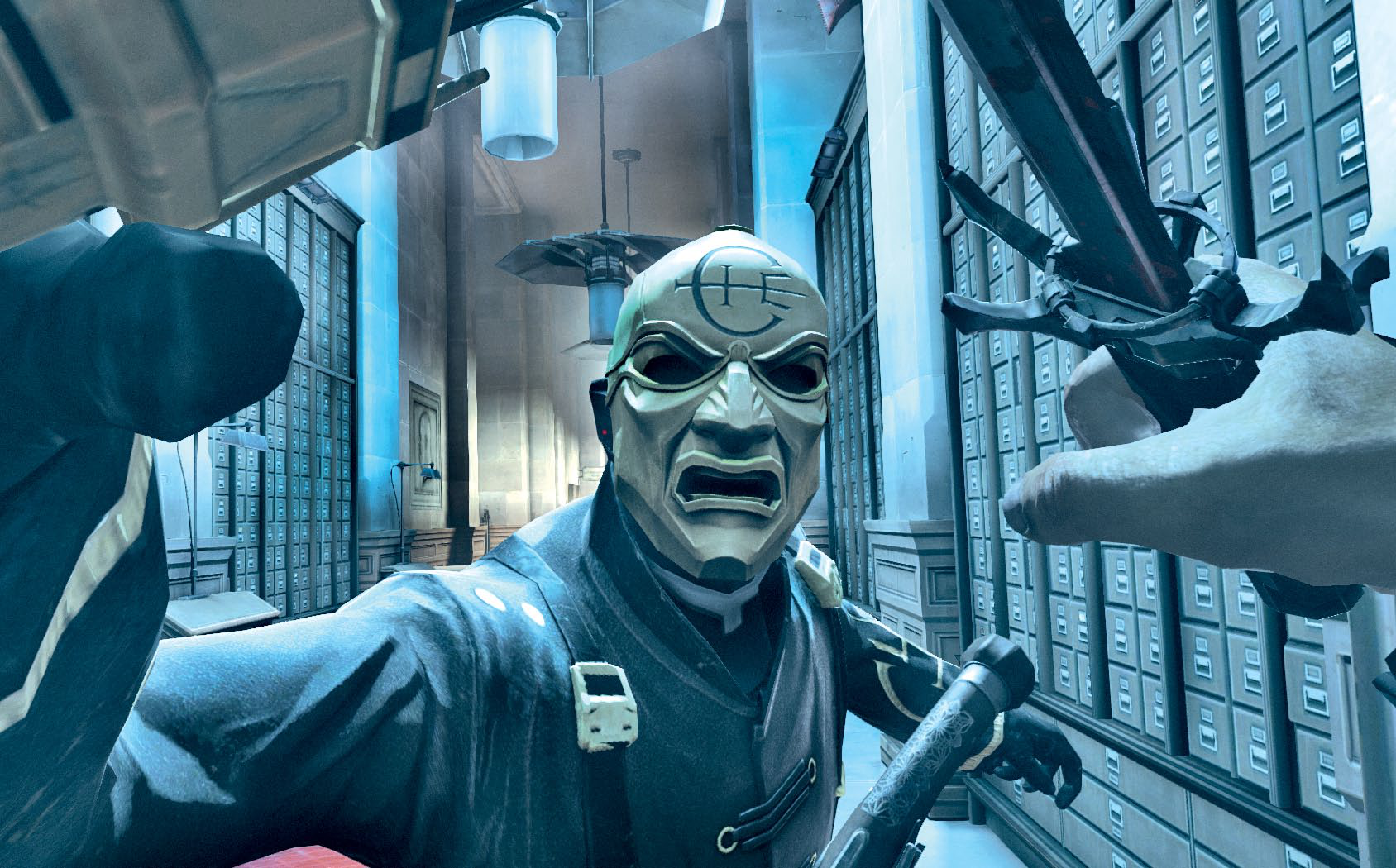
I Blink behind a screen in the corner of the room and hold my breath. The guards yell in alarm, I switch to grenades and brace for them to... rush out through the other doors.
They didn’t see me! They must be responding to something else going on. Oh, the bloodied Overseer I just threw off the building? I guess that might be it.
An objective note tells me I’ve prevented the poisoning, with my ingenious and totally intentional distraction technique, so now I just need to take out my target. I slip back out of the window before the metal shutters come down, and Blink down to street level. There’s a gutter down here with a tiny window into the Grand Overseer’s safe room, so all that’s left to do is to load my crossbow and wait.
As well as the openness of the levels themselves, there’s a pleasing amount of flexibility in how to tackle your targets. Prescribed solutions like the poisoning are blended with emergent ones, like planting a razorwire tripmine on the route to the target’s saferoom, or rewiring security to kill him for you.
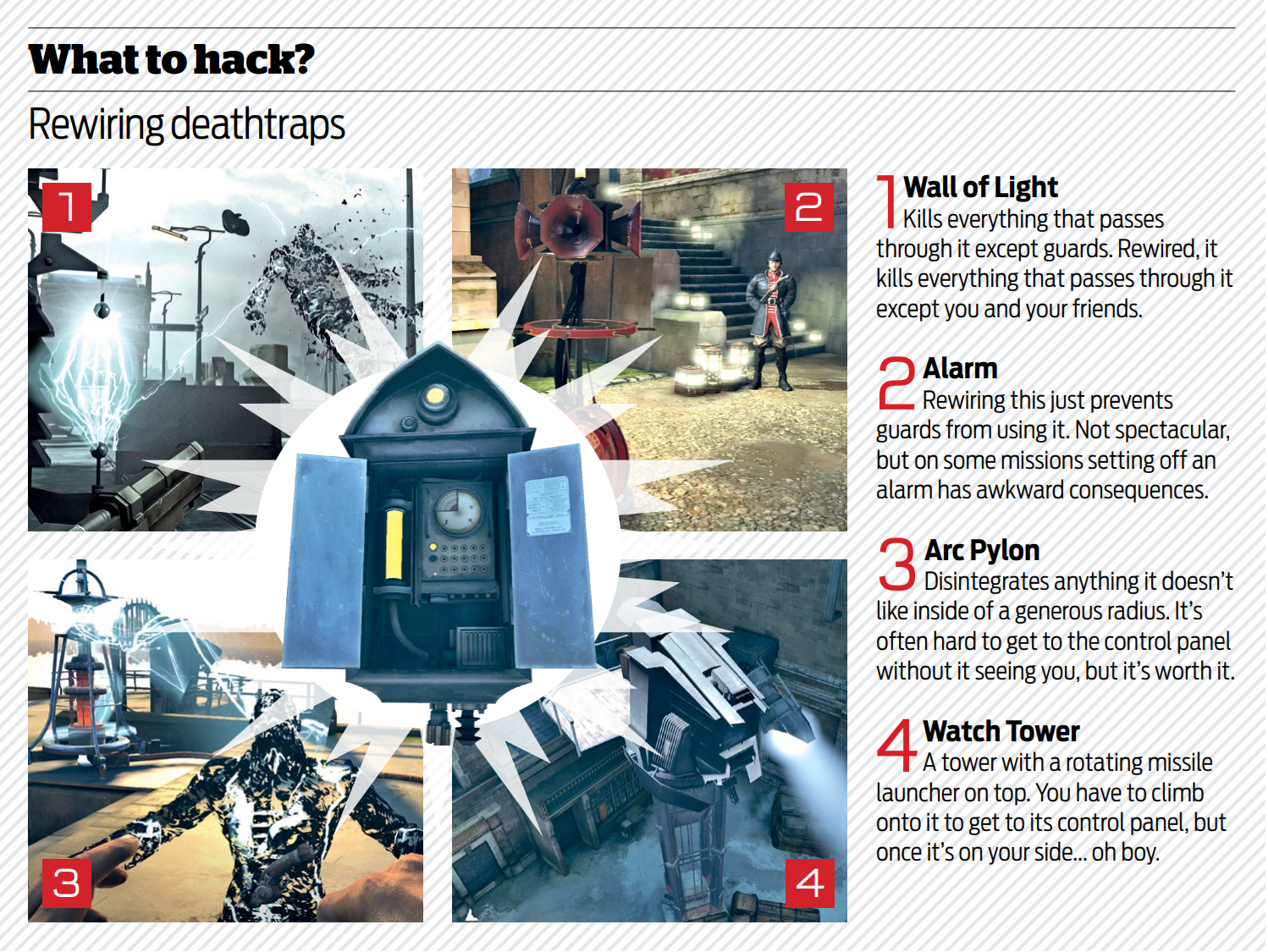
Sometimes key information about your targets’ location or identity is randomised each time you play, so you have to gather clues through exploration and eavesdropping every time. And there’s even a nonlethal way of dealing with every target.
I won’t spoil what it is in this mission, but it’s a good one. In general, too, I like the ridiculous idea of a game about a ‘supernatural assassin’ going to such lengths to cater to the extremist player who’d want to leave every single person alive. And how many people you kill actually changes the later levels: the more corpses you leave in your wake, the more rats and plague zombies you’ll encounter.
I like all that. But Dishonored goes further. Characters start to moan at you if you kill too many people. The nonlethal objectives sometimes involve substantial side-quests that you miss out on if you don’t want to take that weird path. The game itself even says ‘Optional objective failed’ if you’re so audacious as to actually assassinate the person you were sent to assassinate. And if it feels you’ve killed more than it deems morally acceptable, you’re punished with a deeply unsatisfying ending.
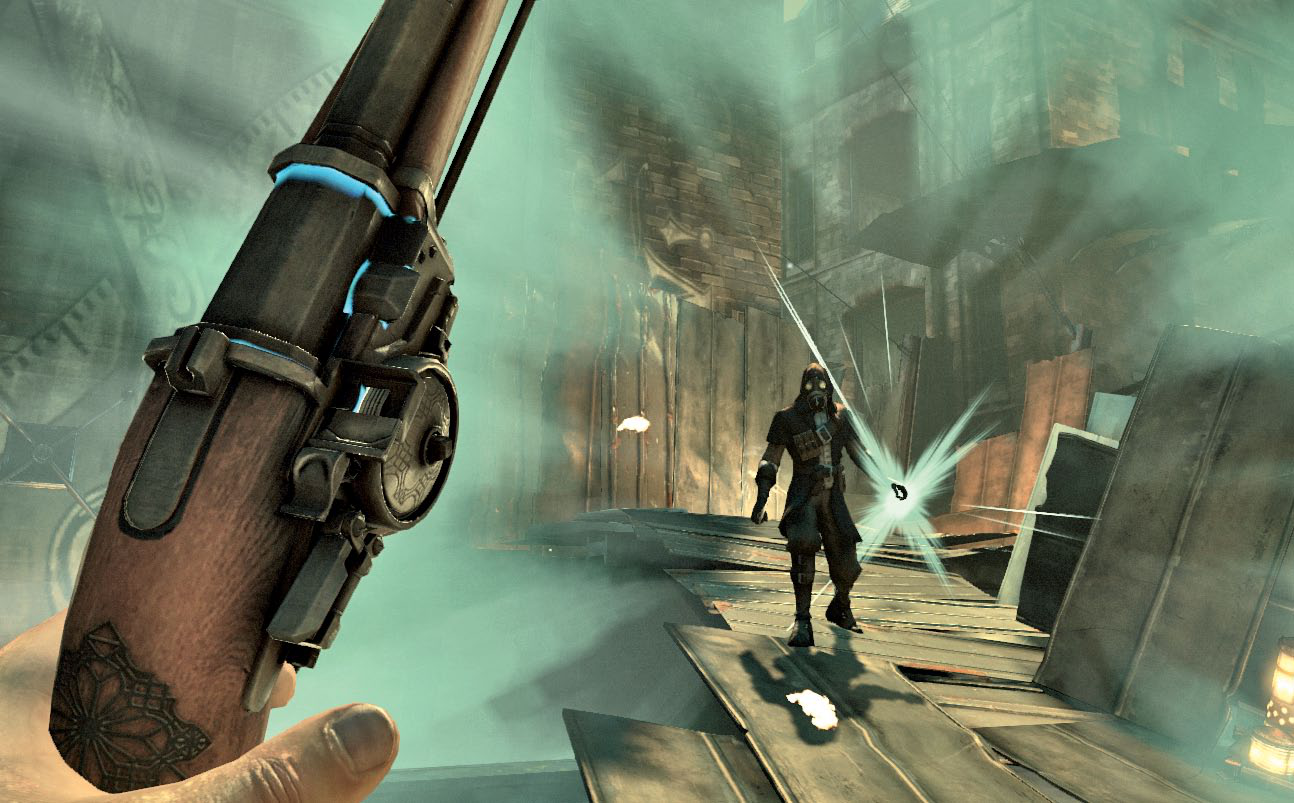
It’s a strangely sanctimonious attitude for a game whose most interesting features all revolve around arranging inventively horrific murders. Particularly when the nonlethal objectives are often crueller than death—one of them leaves a woman unconscious at the mercy of a terrifying creep who’s in love with her.
It’s a big, shiny example of so much we keep asking for in games, but rarely get
If you take the hint and try to avoid killing, you hit a practical problem: there’s only one nonlethal weapon.
Your trademark retractable blade, your upgradeable pistol, crossbow bolts, incendiary darts, explosive rounds, grenades, proximity- triggered springrazors, the Jedi-like Wind Blast, the rat-powered Devouring Swarm, rewired Arc Pylons, Walls of Light and Watch Towers all kill.
Sleep darts don’t, so the merciful play style is limited to those and a very slow sleeperhold move. There’s still a quiet satisfaction to playing this way, but it’s much more repetitive than messing around with all the rest of the horrible toys the game gives you.
Gilded cage
The other thing that makes Dishonored slightly less exciting than it initially seems is that it peaks early. The most liberating missions are all in the first half of its 13-hour story. Some of the later ones are too plot-driven to give you that same freedom, and others are just too crowded with guards. One is set on a bridge, but if you drop down to the water to swim around part of it, you’re stopped by invisible barriers.
The game never becomes as straightforward or restrictive as a conventional shooter, it just doesn’t manage to play to its strengths all the way through.
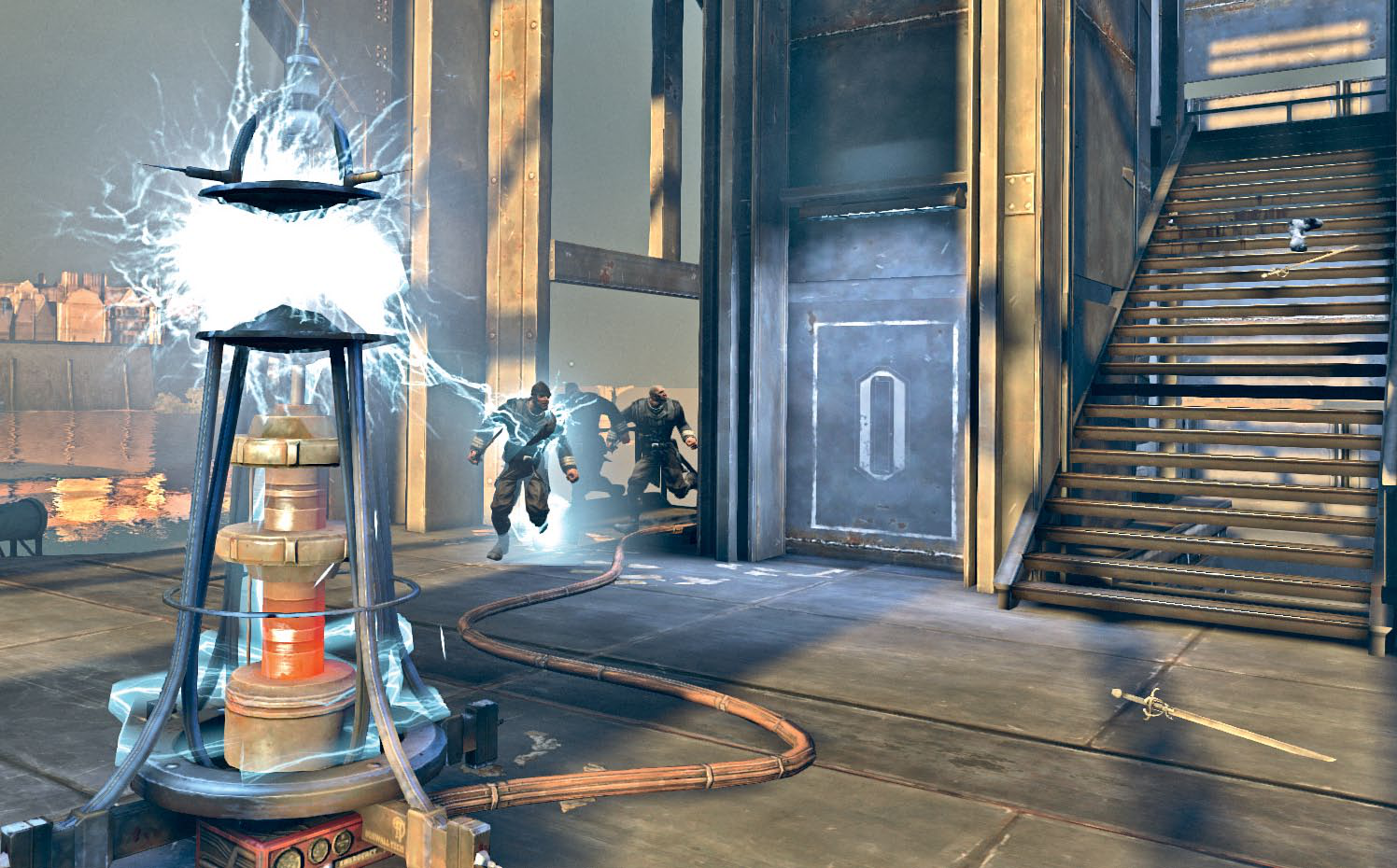
What it never loses is the feeling of a world full of interesting systems to tinker with. Take the technology: every security device is wired to a control panel, and everything that needs a lot of power is wired to a whale-oil battery. Every panel can be rewired to turn the device to your side, and every battery can be removed to turn it off.
At one point I couldn’t find a way past an Arc Pylon: a Tesla-coil that obliterates any intruder in a certain radius. The panel to rewire it was in range of the Pylon itself, impossible to reach alive. The battery that powered it was on a low platform that I also couldn’t get to without going near the Pylon. But I could see it, and I happen to know that whale oil batteries are highly explosive.
I shot it with a crossbow bolt, the battery blew, and the Pylon powered down. While the guards investigated the blown battery, I crept over to the control panel and rewired it. There were a few more batteries in a nearby storage room, so I stole a new one and powered it back up, now working for me. It fried so many guards that I eventually had to replace the battery.
A perfect swarm
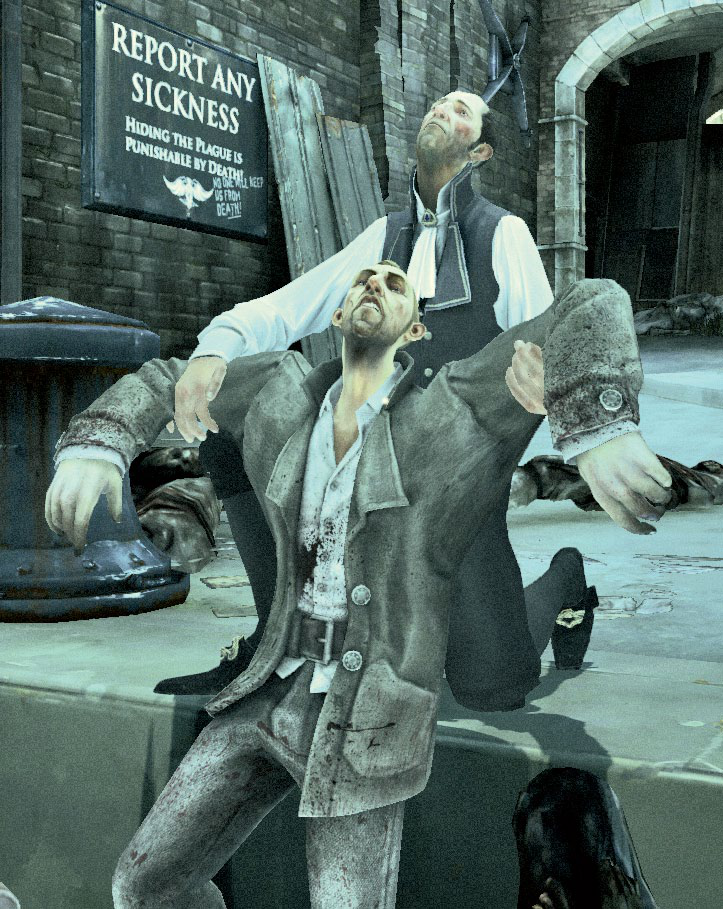
Part of the reason Dunwall’s oppressive government installs automated security like this is to curb the spread of rats, which are a system in themselves. They’re everywhere, but they don’t pose a threat unless they gather into a bona fide swarm. That tends to happen around corpses, which they flock to wherever they find them. Once they’ve picked the body clean, the swarm will happily move onto living targets: you or your enemies.
I got cornered by a swarm while sneaking through a manor house. I’d slipped past two thugs to get into a bedroom, but now the swarm was between me and the door. So to solve two problems at once, I shot the wall.
The thugs ran over to investigate the noise, the rats ran over to investigate the thugs, and while the seething mass of vermin and flesh wrestled with itself, I skirted round it and sneaked upstairs.
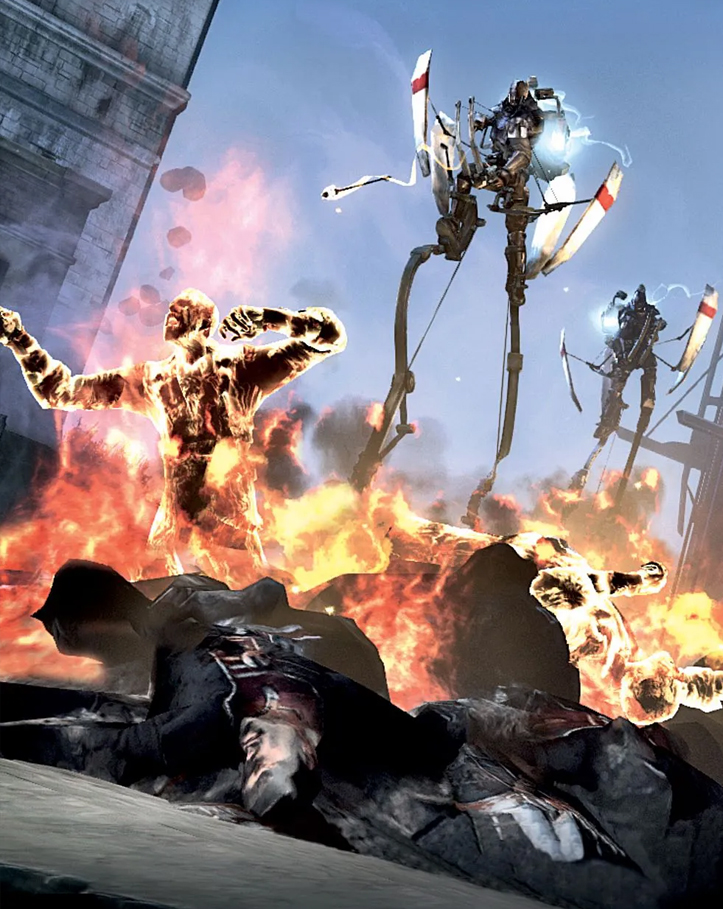
Then there’s the Possession spell: once you’ve invested enough in it, you can take control of any man or beast for a few seconds. The limitations are pretty strict: you can’t attack, you die if they die, and when the spell ends, you step out of your victim rather than returning to your original location. But you can use Possession to slip past security systems without hacking them, or to escape a crowd of angry guards. I loved taking control of a Tallboy, the towering archers on stilts. The rest of the guards just see you vanish, and search for you while their heavy backup mysteriously wanders off to be alone.
Something else Dishonored never loses is its aesthetic flair. Dunwall is a rotting city port defined by the sharp divide between rich and poor.
Everything is weathered, faded and crumbling except for the pristine soapstone mansions of the aristocracy, and the game art relishes that grotesque contrast. Every monied bureaucrat wears a caricature of a sneer, every plague victim an exaggerated look of permanent dismay.
We rarely get to explore a setting like this
The masquerade mission is the visual centrepiece: a silk draped party in a manor of dazzling opulence, attended by nasty socialites whose monstrous masks seem like an externalisation of their ugly indifference to the plague. In the street outside, its vomiting victims are cut down by the guards’ explosive arrows if they stumble too far out of the gutter.
Dishonored’s whole world is textured with an oil-painted smudge that brings out the 19th-century vibe—despite the sci-fi tech. That’s part of what makes its atmosphere so intoxicating: we don’t often get to explore a setting like this.
This review was originally published in PC Gamer #246 (UK, December 2012).
You can still subscribe to PC Gamer to get new issues of the magazine (in print!) every month.
For all those reasons, I recommend turning off almost every part of the interface. There’s a thrillingly nerdy array of options for this, and I found myself getting more and more lost in the game once I’d tinkered with them: I learned to listen for the noise of my mana recharging, read street signs to figure out where I was going, and notice the way I was holding my weapon to check whether I was in sneak mode.
This is all PC specific, and our version gets all the special attention we like: field-of-view options, responsive mouse movement, graphics options – you can even ‘Disable rat shadows’. +5 to the score right there.
Assassin’s speed
The only thing I can’t vouch for is performance: Bethesda aren’t letting code out of their office at time of writing, so I’ve only played it on a 2.8GHz Core i7 with a 2GB GeForce GTX 670 graphics card.
On that setup—contain your shock—it ran smoothly.
The fact that someone’s still putting real effort into the PC version of their multi-platform game is one good reason to buy it. But with Dishonored, there are quite a few. The fact that it doesn’t have any unskippable boss fights. That it’s one of the few major new games that isn’t a sequel or a remake. That a developer went to huge lengths to allow players this much freedom, and a publisher gave them the time and money to make it this slick.
It’s a big, shiny example of so much we keep asking for in games, but rarely get. Luckily, the best way to vindicate it is to buy and then play an amazing game.
Sumber: PC Gamer